Bitchat: Inside Jack Dorsey’s Offline Messaging Revolution 🚀📱
Messaging Without the Internet: How Bitchat Uses Mesh Networks & Encryption to Keep You Connected Anywhere 🌐📡💬

Imagine sending messages without Wi-Fi, cellular data, or even the internet. Sounds futuristic, right? Yet Jack Dorsey, co-founder of Twitter, has turned that vision into reality with Bitchat, a cutting-edge offline messaging app designed for privacy, resilience, and accessibility.
Bitchat represents a new era in messaging: one that works anywhere, anytime, without relying on servers or mobile networks. In this blog, we will dive deep into its technology, architecture, uniqueness, implementation, use cases, limitations, and future potential.
1️⃣ What is Bitchat? Overview 🌐
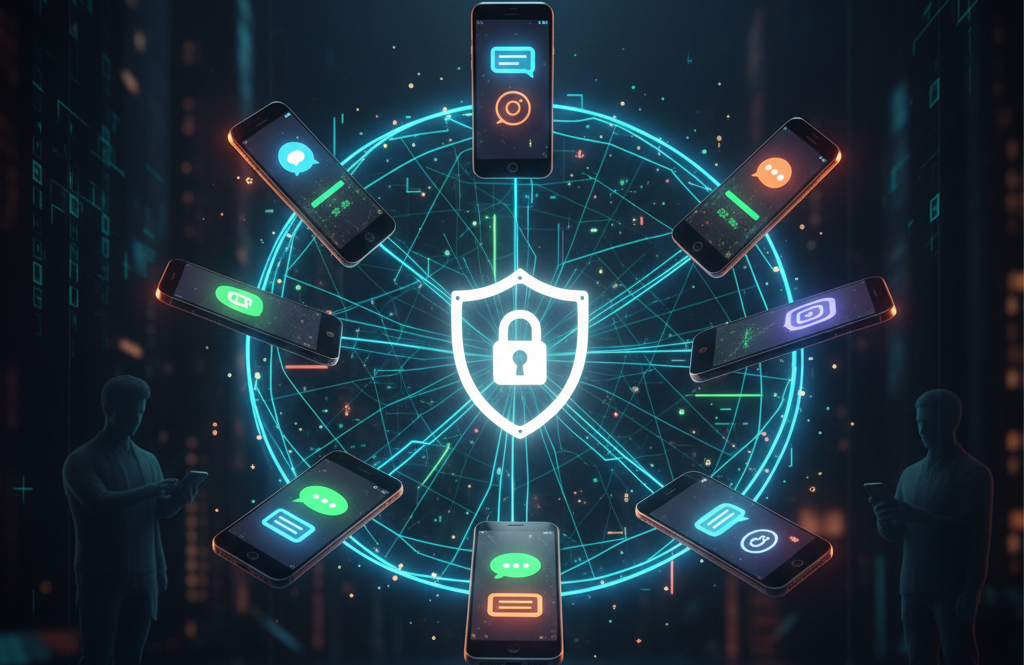
At its core, Bitchat is a messaging app that works entirely offline. Unlike WhatsApp or Telegram, it does not require an internet connection or even a cellular network. It relies on peer-to-peer communication using Bluetooth mesh networking, meaning devices can connect to each other directly or via intermediate devices.
Key Highlights:
Offline Messaging: Works without Wi-Fi or mobile data.
Decentralized Architecture: No central servers; every device is a node.
Privacy-First: No accounts, phone numbers, or personal identifiers are needed.
Encrypted Communication: Messages are end-to-end encrypted, even across multiple device hops.
Think of it as a mesh of devices acting like a digital whisper network, passing messages across multiple nodes until they reach the recipient.
2️⃣ Tech Stack & Platforms 🖥️📲
Bitchat is built on modern, native platforms optimized for offline peer-to-peer messaging:
iOS: Written in Swift, using the CoreBluetooth API to manage device discovery, connection, and messaging. Swift ensures smooth performance on Apple devices while providing access to low-level BLE features.
Android: Built in Kotlin, leveraging the Android BLE API for Bluetooth Low Energy communication. Kotlin ensures cross-device stability and integrates well with Android’s power-saving mechanisms.
Optional Decentralized Protocols: Integration with Nostr, a decentralized communication protocol, allows messages to propagate beyond the immediate offline mesh when internet is available.
Open-Source Frameworks: The app uses open-source BLE libraries, encryption modules, and local storage tools, enabling other developers to contribute to mesh optimization, routing, and security.
Why This Stack Matters:
The choice of native languages and BLE APIs allows Bitchat to maintain low latency, minimal power consumption, and cross-platform compatibility, all of which are critical for a mesh-based offline network.

3️⃣ How Bitchat Works: Architecture & Networking ⚙️🔗
Bitchat’s architecture is a fundamental departure from traditional messaging apps. Here’s how it works in detail:
Peer-to-Peer & Serverless Design
Every device in Bitchat acts as a node in a decentralized network. There are no central servers storing messages. Instead:
Messages originate from the sender’s device.
Nearby nodes (other Bitchat users) relay the messages until they reach the recipient.
Devices can temporarily store messages and forward them when in range of another node.
This design makes the system resilient, private, and censorship-resistant.
Bluetooth Mesh Networking
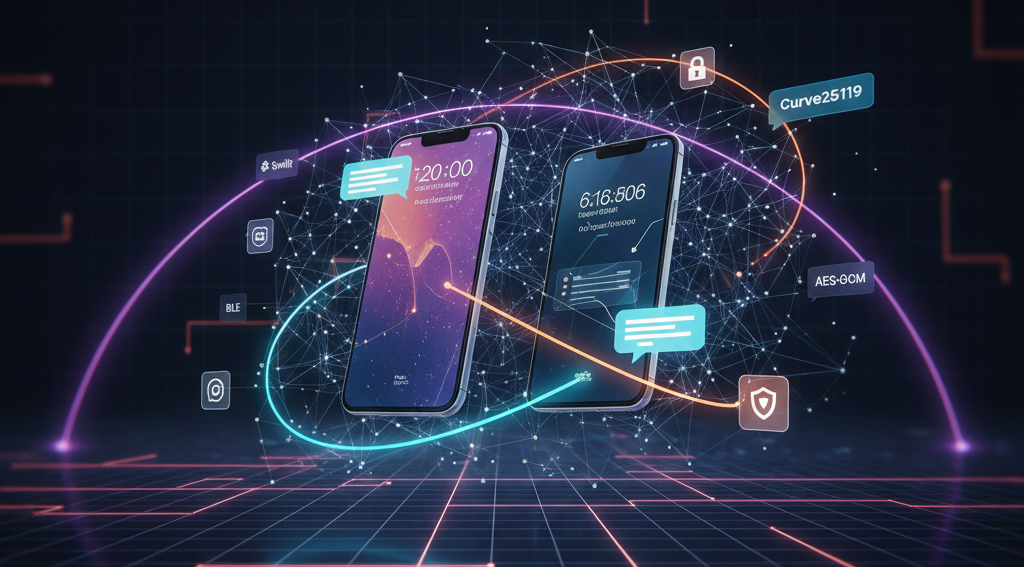
Bitchat uses BLE (Bluetooth Low Energy) to create a mesh network:
Devices broadcast their presence and scan for nearby nodes.
Messages are forwarded hop-by-hop across devices, extending the effective range.
This creates a dynamic, self-healing network: if a node goes offline, messages reroute through other devices.
Offline Message Propagation
If the recipient is offline, messages do not fail. Instead, they remain in the mesh network and hop through intermediate devices until delivery is possible. This ensures near-reliable message delivery even without continuous connectivity.
Ephemeral & Local Storage
Messages are stored locally and automatically deleted after delivery. This reduces storage overhead, enhances privacy, and prevents central data leaks.

4️⃣ What Makes Bitchat Unique 🌟🛡️
Bitchat introduces several innovations that differentiate it from traditional messaging apps:
Internet-Free Messaging: Unlike WhatsApp, Telegram, or Signal, Bitchat can function entirely offline.
Decentralized & Anonymous: No phone numbers, accounts, or central servers. Users communicate with just a display name.
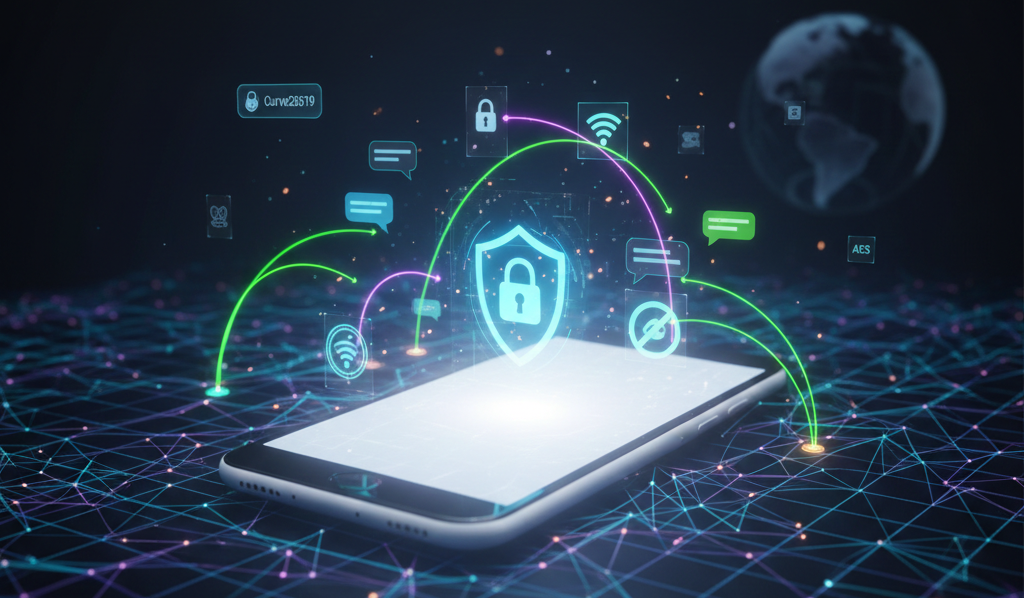
Encrypted Multi-Hop Messaging: Uses Curve25519 + AES-GCM for encryption. Even when messages traverse multiple devices, privacy is maintained.
Resilience & Redundancy: Messages can hop across multiple nodes, extending coverage in areas with high user density.
Minimal Setup & High Privacy: Setup is instant, and messages are ephemeral, preventing long-term tracking.
Censorship-Resistant Design: Ideal for users in regions with restricted internet access or government monitoring.
In essence, Bitchat merges modern encryption, offline peer-to-peer networking, and privacy-first design into one package.
5️⃣ How Bitchat Is Made: Technical Implementation 🛠️💡
Creating Bitchat required addressing unique technical challenges:
Mesh Network Engine
Handles node discovery, message relaying, and dynamic routing.
Supports hop-by-hop message propagation to extend network reach.
Efficiently manages device joining/leaving the network, ensuring reliability.
Encryption & Security
Messages are encrypted end-to-end using Curve25519 for key exchange and AES-GCM for message encryption.
Ephemeral message storage reduces the risk of data leaks.
Security is maintained even in a multi-hop offline environment, which is challenging compared to server-based systems.
Cross-Platform Synchronization
iOS ↔ Android BLE communication requires handling different BLE stacks and device-specific quirks.
Efficient battery management ensures continuous scanning without draining devices.
Developer Ecosystem
Open-source contributions allow improvements to mesh routing, encryption, and even IoT device integration.
The design is scalable, supporting future hybrid networks combining Bluetooth, Wi-Fi Direct, or other wireless protocols.
6️⃣ Use Cases & Applications 🌍📡
Bitchat’s offline-first design unlocks real-world applications where traditional apps fail:
Natural Disasters 🌪️: Communicate when internet or mobile networks fail.
Remote & Rural Areas 🏞️: Villages or regions with poor coverage can stay connected.
Crowded Events 🎉: Concerts, festivals, or protests with overloaded networks.
Privacy-Sensitive Communication 🕵️♂️: Journalists, activists, or whistleblowers can send messages securely.
Emergency Services 🚑: Hospitals, rescue teams, and volunteer networks can coordinate even without connectivity.
Bitchat is not just a tech novelty - it’s a solution for real-world communication challenges.
7️⃣ Launch Timeline & Availability ⏳📅
Bitchat is gradually rolling out:
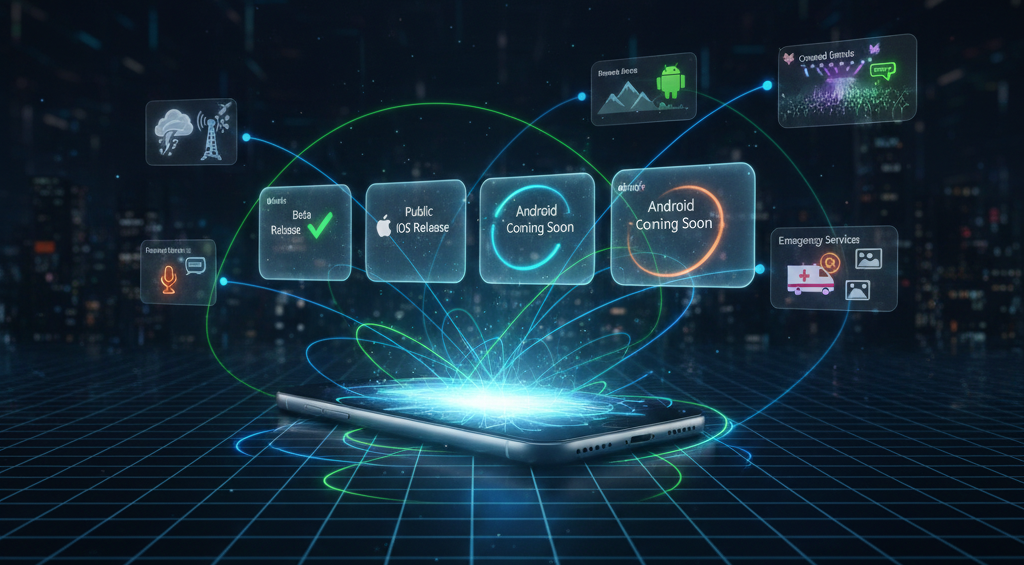
Beta Release: Initially via iOS TestFlight, limited to early testers.
Public iOS Availability: Fully functional on the App Store, enabling offline messaging.
Android Version: Under development, expected soon.
Future Updates: Wi-Fi Direct support, richer media (images/video), improved mesh scalability, and extended range.
Even in its early versions, Bitchat showcases a new approach to resilient, decentralized messaging.
8️⃣ Comparison with Existing Technologies ⚖️
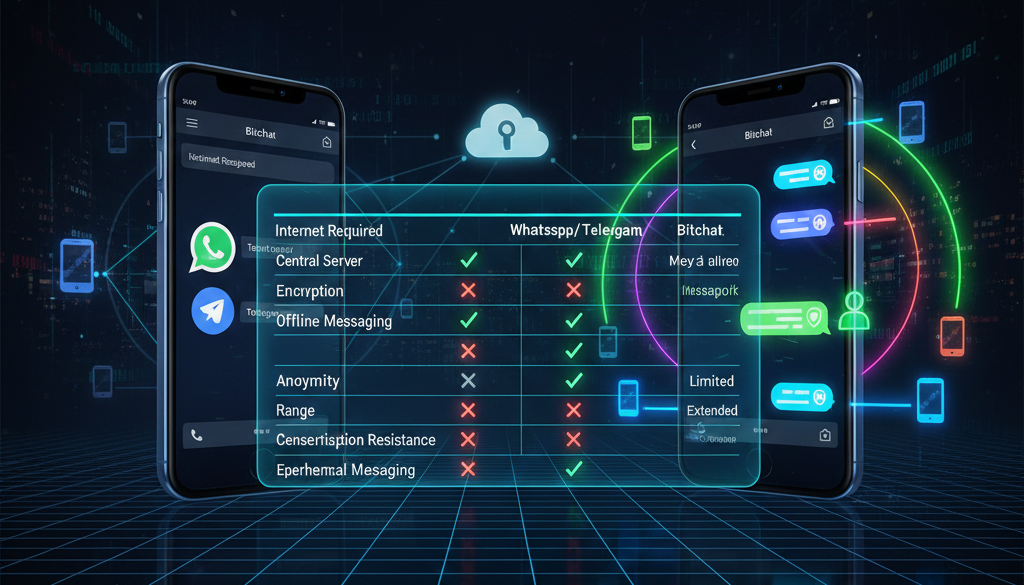
| Feature | WhatsApp/Telegram | Bitchat |
| Internet Required | ✅ Yes | ❌ No |
| Central Server | ✅ Yes | ❌ No |
| Encryption | ✅ End-to-end | ✅ End-to-end (multi-hop) |
| Offline Messaging | ❌ No | ✅ Yes |
| Anonymity | ❌ Accounts required | ✅ No account needed |
| Censorship Resistance | ❌ Limited | ✅ High |
| Range | Depends on network | BLE mesh multi-hop |
| Ephemeral Messaging | Limited | ✅ Automatic deletion |
Bitchat is the first mainstream-ready offline, decentralized, encrypted messaging solution, filling a gap no other app currently addresses.
9️⃣ Potential Limitations & Challenges ⚠️
While innovative, Bitchat faces some challenges:
Range & Density Dependence: Effective message delivery depends on device proximity. Sparse networks may experience delays.
Battery Usage: Continuous BLE scanning can impact battery life.
Security Audits Needed: Although encrypted, mesh networks may have vulnerabilities without independent audits.
Media Limitations: Currently optimized for text; large files like videos propagate slowly.
These are typical trade-offs for mesh-based, offline, decentralized systems.
🔟 Future Potential & Enhancements 🌐
Bitchat is more than a messaging app - it’s a platform for the future of offline, decentralized communication:
Hybrid Mesh Networks: Combining Bluetooth, Wi-Fi Direct, and LoRa for extended range.
Rich Media Support: Images, videos, and files in offline networks.
IoT Integration: Devices can communicate securely without internet.
Research Opportunities: Decentralized communication protocols, disaster response networks, and privacy-first tools.
Global Connectivity: Mesh networks could bridge gaps in areas with limited or no internet.
Bitchat demonstrates what the next generation of secure, resilient communication could look like.
Conclusion 🏁✨
Bitchat is a paradigm shift in messaging technology. By combining Bluetooth mesh networking, decentralized architecture, and end-to-end encryption, it allows secure, offline communication like never before.
Whether for emergencies, remote communication, crowded events, or privacy-conscious users, Bitchat shows the potential of decentralized, resilient messaging networks.
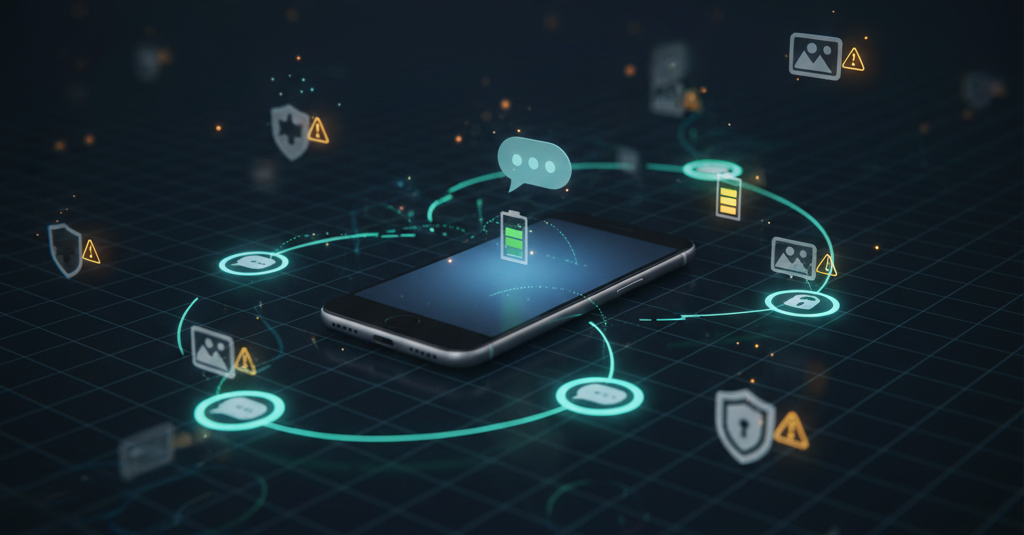
📡 Fun Visualization: Imagine your message hopping from one device to another through a crowd, reaching your recipient without any internet at all - that’s the magic of Bitchat in action! 💌
Imagine a messaging app that works entirely offline: that's Bitchat. Co-founded by Jack Dorsey, Bitchat uses Bluetooth mesh networking for peer-to-peer communication, bypassing the need for Wi-Fi, cellular data, or internet. With a decentralized architecture, it ensures privacy, resilience, and accessibility. Messages are encrypted and can hop through multiple devices until they reach the recipient. Ideal for use in natural disasters, remote areas, or privacy-sensitive environments, Bitchat offers a new level of secure, offline communication without the need for central servers or personal accounts.
About the author
- I am a Software Engineer and Cybersecurity Researcher with over 4.5 years of hands-on experience through internships and freelance work. I specialize in building scalable, high-performance web applications and designing secure, reliable systems. As a record holder recognized by the International Book of Records and India Book of Records, I share technical knowledge through blogs, reaching a professional network of 26K+ followers. On Hashnode, I share insights and practical experiences in software engineering and cybersecurity.
Comments
Join the discussionNo comments yet. Be the first to comment.